
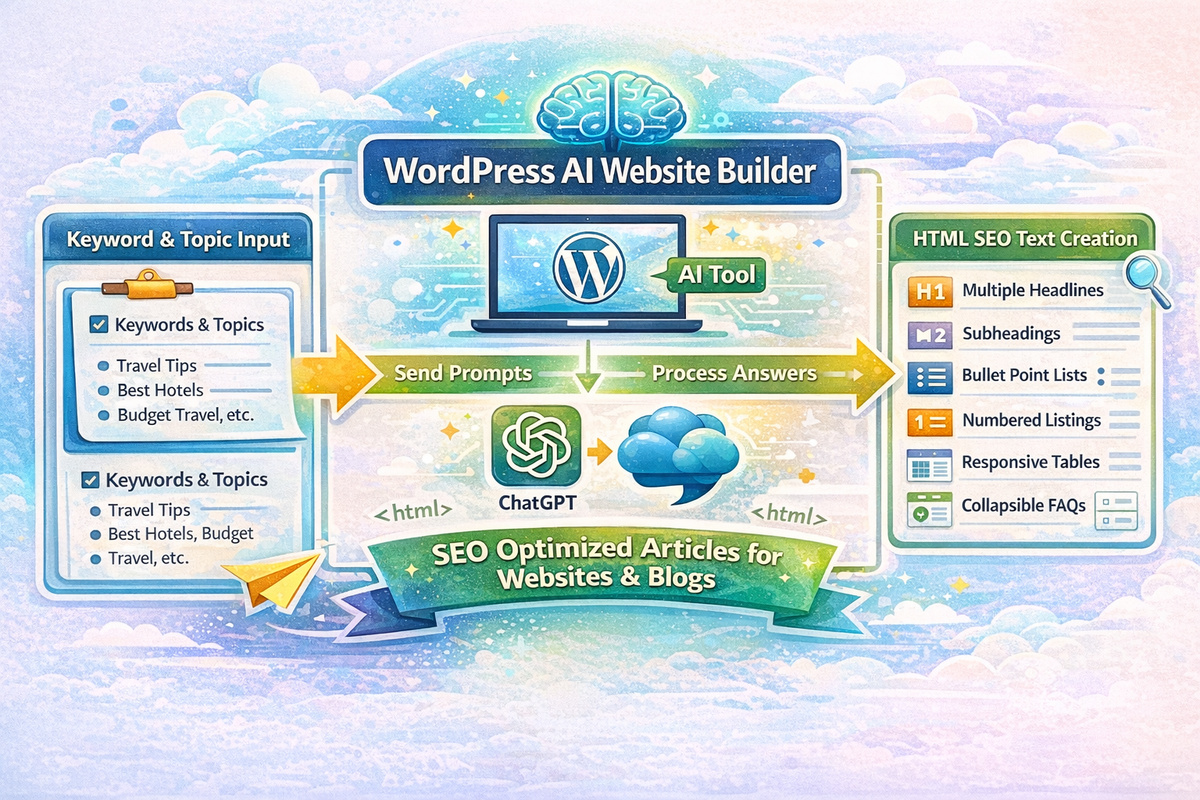
When content plans keep growing but writing time stays limited, a WordPress AI website builder gives site owners a practical way to move from topic idea to finished draft with less friction. Bloggers, affiliate marketers, and self-hosted WordPress users usually do not need more theory. They need a workable system that helps them turn keyword plans into website texts, blog articles, headings, subheadings, and matching visuals without getting stuck halfway through the process.
For many projects, this WordPress AI website builder solves a simple but costly problem: good ideas are easy to collect, yet hard to shape into consistent content. One day you need a homepage paragraph, the next day a blog post, then a comparison article, then a visual for the featured image. Instead of juggling separate writing, outlining, and image tasks, users can work from one content direction and produce material that is easier to review, adjust, and publish.
Create More Content Without Slowing Down
Small site owners and independent publishers rarely fail because they lack ideas. They fall behind because every article needs planning, structure, wording, revision, formatting, and media support. In that situation, a WordPress AI website builder helps reduce the time spent staring at an empty editor and increases the time spent shaping content that is ready for real use.
That matters for affiliate blogs, niche sites, and business websites where consistency influences traffic, trust, and conversions. A draft does not need to be final on the first pass. It needs to be useful, organized, and relevant enough to move your work forward. With a practical workflow, the WordPress AI website builder can help users create first drafts around search terms, product topics, and audience questions instead of starting from scratch each time.
Speed alone is not the goal. Better momentum is the goal. When a tool can suggest multiple headlines, create subheadings, write around keyword specifications, and support image generation, the work becomes easier to manage. Users can then spend more attention on editing, positioning, and accuracy rather than on repetitive setup tasks.
Why a WordPress AI Website Builder Fits Real Publishing Work
Start With Keywords Instead of a Blank Screen
Most content projects begin with a phrase, a topic cluster, or a list of search terms. That is why many site owners prefer software that starts from keyword input rather than from random prompt experiments. With a WordPress AI website builder, the workflow can begin where SEO planning usually begins: with the terms your audience may already be searching for.
From there, the software can turn topic direction into usable copy blocks, headline ideas, and supporting structure. This approach is helpful for bloggers who want to write with intent, for affiliate publishers who need commercial content around buyer questions, and for website owners who want their service copy to stay focused on the terms that matter most for discoverability.
Turn One Topic Into Headings, Drafts, and Images
A strong article or service page is rarely just one large paragraph. It needs a clear flow, useful headings, supporting examples, and visual material that fits the subject. In that setting, a WordPress AI website builder becomes more than a text prompt helper. It becomes a production shortcut that can turn one input direction into several parts of the finished asset.
Instead of writing a title, then pausing to invent subheadings, then switching tools to create visuals, users can build around one content goal. The result is a smoother workflow for websites that need regular updates and a simpler path for publishers who want to keep quality under control while producing more material over time.
Write Website Copy That Matches Search Intent
Search visibility is not just about repeating a phrase. Strong website copy usually works because it answers the reason behind the search. Some visitors want information, some want comparison, and some are close to choosing software. In those moments, a WordPress AI website builder is useful because it can help shape text around a topic, a purpose, and a likely user need rather than around disconnected keywords.
That is especially important for homepage sections, product introductions, category texts, and commercial blog posts. Searchers looking for software usually want clarity fast. They want to know what the tool does, who it suits, how it fits into their workflow, and why it may save time or simplify difficult tasks. When those answers appear early and in plain language, the copy becomes more useful for both readers and search engines.
Good structure also improves skimming. Readers do not consume most pages line by line. They scan headings, jump to sections, and look for fast proof that the content understands their problem. Because of that, a WordPress AI website builder has value when it helps users create multiple headlines and subheadlines that organize the message into clear sections instead of producing one long block of generic copy.
How a WordPress AI Website Builder Helps Bloggers and Affiliates
Build Article Drafts Around Real Topics
Bloggers and affiliate marketers usually work with content calendars, review ideas, product themes, seasonal topics, and search-driven article plans. A practical writing system needs to support that rhythm. In daily use, a WordPress AI website builder can help transform topic lists into article drafts that already follow a usable structure, which reduces the time between planning and publishing.
This is helpful when one niche needs many supporting articles. A publisher may need informational posts, product roundups, buyer guides, FAQ content, and supporting website texts that all relate to the same subject. Instead of rebuilding the format each time, the WordPress AI website builder can support a repeatable process where the user defines the angle, reviews the output, and adapts it to the site’s voice and purpose.
Keep Your WordPress Workflow Moving
Content production often slows down for practical reasons, not creative ones. The image is missing. The subheadings feel weak. The article intro is too vague. The service text sounds flat. A WordPress AI website builder helps reduce these interruptions by giving users more of the draft framework at the start.
That matters for self-hosted WordPress users because publishing is not only about writing. It also includes formatting, media choices, internal review, and ongoing updates. A smoother drafting process makes the whole system easier to maintain. For affiliate projects, that can mean faster rollout of supporting content. For bloggers, it can mean more regular publishing. For business sites, it can mean quicker updates to service and product-related texts.
From Keyword List to Finished Draft
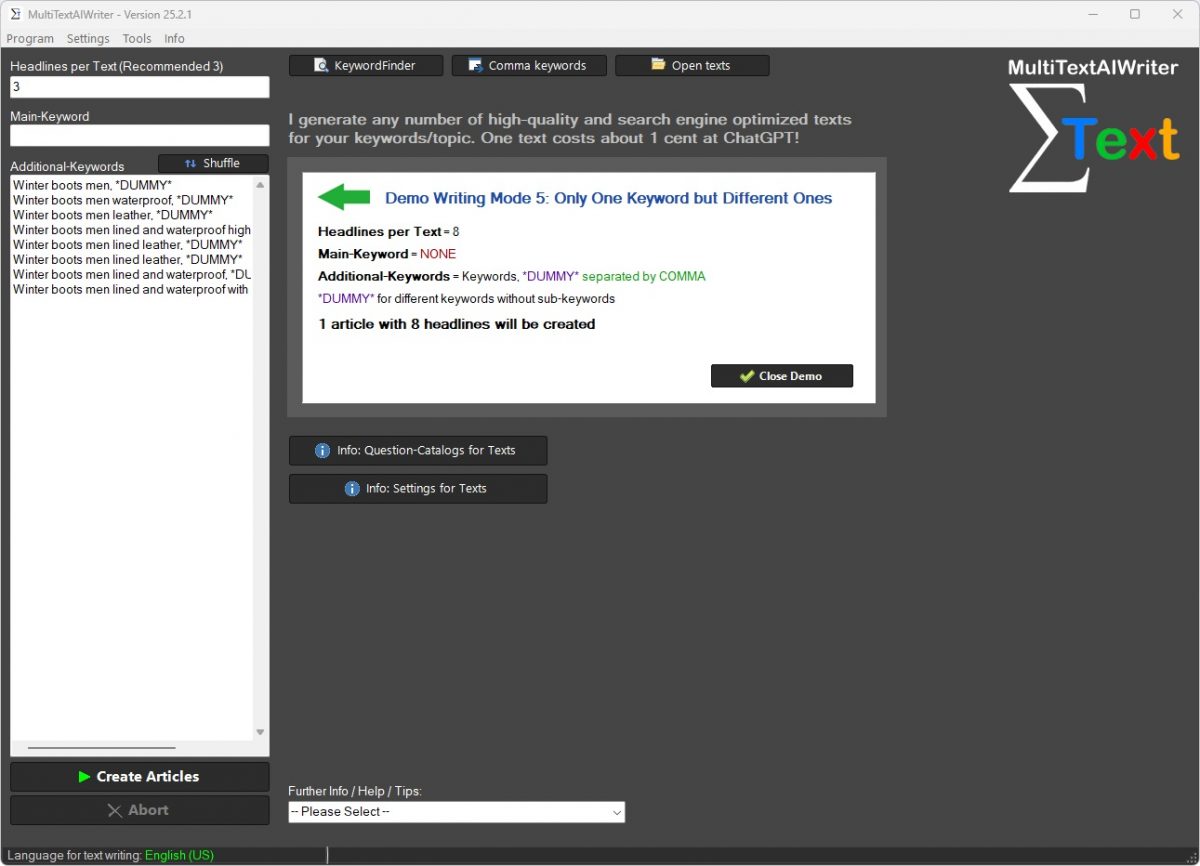
One of the strongest use cases starts with a list of primary and related keywords. A user knows the main topic, adds supporting terms, and uses that material to guide structure and wording. In that workflow, a WordPress AI website builder can produce a more focused draft than a vague one-line prompt because the content direction is clearer from the beginning.
The next step is organization. A good draft usually needs a main heading, logical H2 sections, targeted H3 subpoints, and short paragraphs that are easy to scan. With the right setup, the WordPress AI website builder can help create this structure early so the user is editing a framework instead of assembling one from zero.
After the text draft comes refinement. Some sections may need simpler language. Others may need more commercial intent, stronger user benefits, or better alignment with a niche topic. That review phase still matters. Software can help you move faster, but clear positioning, factual accuracy, and final judgment still depend on the person publishing the content.
Then comes supporting material. Articles and website texts perform better when they are visually supported. If the same workflow also includes AI-generated images, the user can prepare visuals that match the topic without leaving the content process behind. That makes planning more efficient and reduces the back-and-forth that slows many publishing teams and solo site owners.
What a WordPress AI Website Builder Can Create
Website Texts
Business websites need more than blog content. They need introductions, service descriptions, landing copy, benefit sections, and supporting text for category or product areas. In that context, a WordPress AI website builder can help users draft website texts that are easier to shape around target terms, user intent, and conversion goals.
This is useful for people updating older pages as well as for those launching new sites. Writing clear copy for a homepage or service page can be difficult because it needs to sound simple while still covering value, audience, and topic fit. Starting from a draft built around keywords and structured headings makes the editing stage easier and more focused.
Blog Articles and WordPress AI Website Builder FAQ Sections
Articles do more than fill a blog archive. They answer questions, support rankings, attract long-tail traffic, and build topical relevance around a niche. For that reason, a WordPress AI website builder can be especially useful when users need repeatable article production without repeating the same weak structure every time.
FAQ content is another strong application. Readers appreciate direct answers, and FAQ sections can help organize buyer questions or topic-specific concerns in a compact format. When article drafts include useful questions and answers, the content becomes easier to scan and more practical for visitors who want quick information before taking the next step.
AI Images and Supporting Assets
Words alone rarely carry a modern post or page. Visuals influence readability, perceived quality, and shareability. That is why many users want a system where text and imagery can be prepared in the same workflow. In daily use, a WordPress AI website builder with image generation support can help users produce topic-matching visuals for featured images, supporting graphics, and other content needs.
This approach is valuable for smaller publishers who do not want to source every image manually. It can also help maintain visual consistency across a site. When the image step is integrated into the same production flow as the writing step, fewer tasks get lost between draft and publication.
Reasons Users Choose a Simpler Content Workflow
Many software buyers are not looking for novelty. They are looking for fewer repeated tasks. They want to spend less time rebuilding article structures, less time forcing keywords into awkward copy, and less time moving between disconnected tools. Under those conditions, a WordPress AI website builder becomes appealing because it supports a practical content routine rather than just one isolated feature.
That routine may include choosing a target phrase, defining related terms, generating heading options, reviewing body copy, adding an FAQ block, preparing an image, and then publishing into WordPress after edits. None of these steps is mysterious. The value comes from how smoothly they connect.
Clear software value also depends on fit. Bloggers may care most about article throughput. Affiliate publishers may care most about topic coverage and commercial-intent drafts. Business site owners may care most about service-page copy and easier updates. A flexible WordPress AI website builder can support all three groups when it helps them build useful drafts around the content tasks they already have.
Choosing a WordPress AI Website Builder for Self-Hosted Sites
Self-hosted WordPress users usually want control. They want to manage their own publishing setup, shape their own content strategy, and decide how much automation fits their process. That is why a WordPress AI website builder is most compelling when it supports control rather than replacing it.
A good fit should help users start quickly, create around defined keywords, generate multiple headings and subheadings, support website and blog copy, and provide image options that reduce extra production work. At the same time, the final content should still be reviewed for accuracy, tone, intent, and brand fit before it goes live.
For affiliate marketing projects, that balance matters even more. Commercial articles need clarity and trust. General blog posts need relevance and structure. Service pages need strong benefit-led writing that explains what the offer does in plain English. A WordPress AI website builder can support all of that when the user treats it as a drafting and production tool, not as a substitute for judgment.
Used well, the software helps turn content planning into content output with less friction. That makes it easier to keep publishing, easier to cover more topics, and easier to build a site that stays active instead of waiting for the perfect moment to write the next piece.