
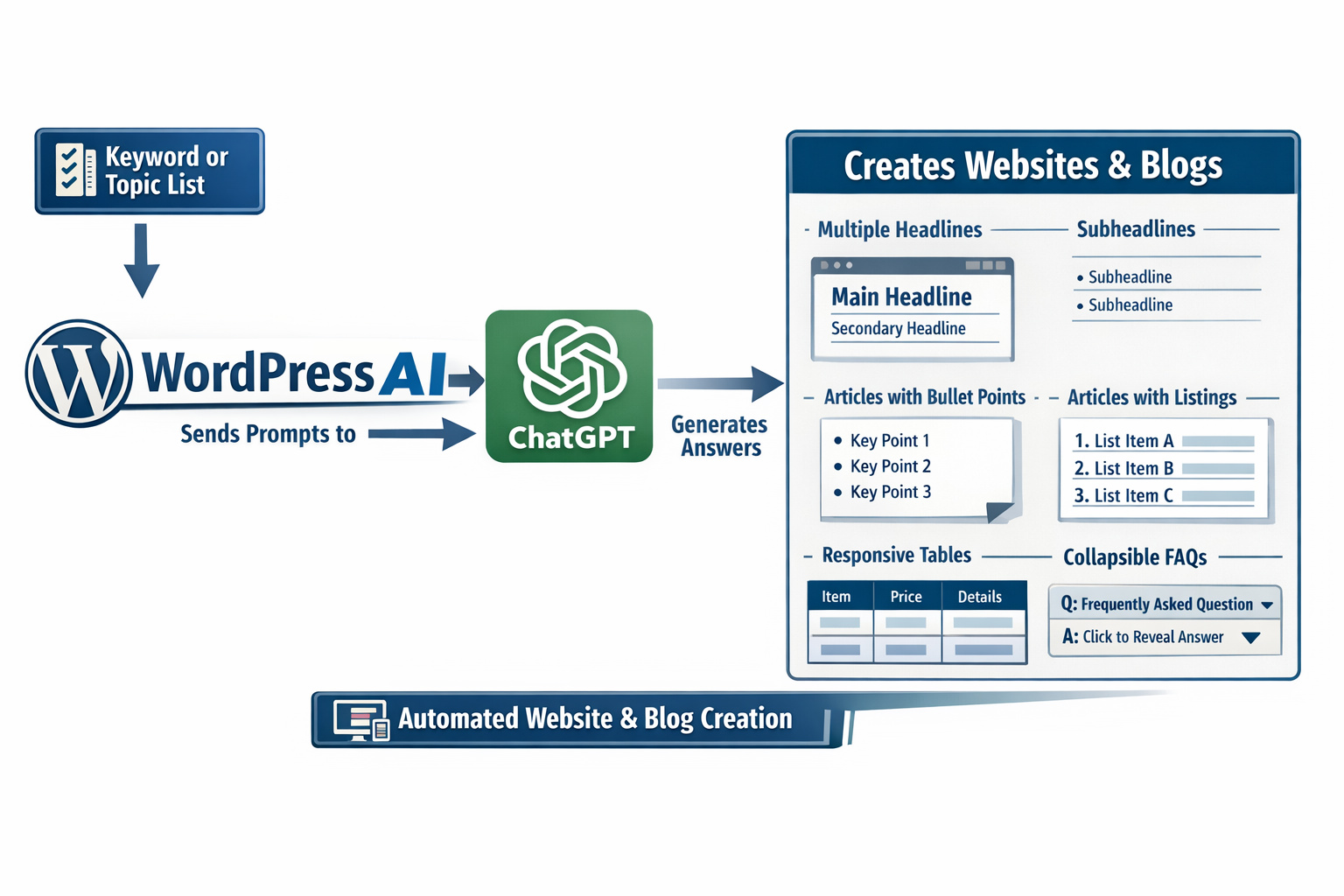
Publishing on a self-hosted site takes more than writing a few paragraphs. You need a solid topic, a clean structure, sections that are easy to scan, useful formatting, and visuals that make the post feel complete. For that kind of workflow, WordPress AI is built to help. It supports bloggers, affiliate marketers, and content-focused site owners as they turn ideas into structured drafts they can review, edit, and publish with confidence.
Instead of bouncing between research notes, writing tools, table generators, and image apps, you can keep the content process more focused. With WordPress AI, blog articles, list-based content, Markdown tables, and topic-driven drafts can be created in English, German, Spanish, French, and Italian. The result is not locked output. You stay in charge of edits, accuracy, product angles, and final wording before anything goes live.
Create More Content Without Losing Editorial Control
Many WordPress users do not struggle with installing plugins or opening the editor. The real bottleneck shows up later. A keyword list sits unused. A promising article idea never becomes a finished post. A comparison article takes too long because formatting, subheadings, lists, and tables all have to be built by hand. Publishing slows down, and the content calendar becomes harder to maintain.
That problem is addressed by WordPress AI through a stronger first draft. You can start from a topic, a keyword group, or a simple content angle and move toward an article structure that already feels usable. That matters for affiliate content, niche sites, personal blogs, and content-driven projects where consistency can make a visible difference over time.
The software is not meant to replace your judgment. It is meant to reduce repetitive writing and formatting work so your time goes into improving the message, sharpening the angle, and checking the final claims. That balance is important for self-hosted publishers who want speed without turning the entire writing process into generic output.
Why WordPress AI Fits Self-Hosted Publishing
Built for Bloggers, Niche Site Owners, and Affiliate Marketers
Self-hosted WordPress users usually want flexibility, control, and the freedom to shape content around their own goals. Some publish review posts. Some build informational blogs. Some maintain affiliate sites with product comparisons, buying guides, and update cycles. These workflows are a good match for WordPress AI because the focus starts with content creation rather than site layout design.
That difference matters. A general site builder may help with visual setup, but it does not always solve the day-to-day production work behind publishing. The focus of WordPress AI is on articles, structures, lists, tables, and visuals that support content output. For users who want more posts published without turning editing into a second full-time job, that is a practical advantage.
WordPress AI Turns Topics Into Structured Drafts
Starting is easier when the first version already has direction. A topic idea can be shaped by WordPress AI into an article draft with multiple sections, helpful subheadings, and content blocks that are easier to expand or trim. Instead of staring at an empty editor, you start with momentum.
This can be especially useful when a topic needs comparison sections, list-based explanations, short answer blocks, or supporting visuals. A base can be created by WordPress AI that you then refine, so each draft feels closer to publishable material rather than disconnected notes pasted together from several tools.
Write From Topics, Keywords, and Publishing Goals
Start With a Topic Instead of a Blank Editor
Blank pages waste time because the first fifteen minutes usually disappear into deciding what comes first, what the angle should be, and how the piece should be organized. Topic-based text creation cuts into that delay. You can begin with a direct subject, a keyword cluster, or a planned article angle and build from there.
For bloggers, this means less hesitation at the start of the writing session. For affiliate marketers, it means faster movement from keyword plan to first article version. For site owners handling multiple categories, it means a simpler way to keep production moving even when attention is split across several content priorities.
Users who already know what they want to publish but want help shaping it into a clear article draft will find WordPress AI well suited to that process. That keeps the workflow focused on execution instead of endless preparation.
WordPress AI Creates Lists, Headings, and Clean Structure
Readers scan before they commit. They look for short sections, clear subheadings, digestible lists, and useful formatting that helps them find what matters. That reading behavior is supported by WordPress AI through drafts that already have structure in place.
List-based content is especially useful for tutorials, product roundups, buying advice, and practical blog posts. Articles can be drafted with WordPress AI in a way that includes listings breaking long explanations into readable parts. That makes editing easier and gives the final post a more organized feel inside the WordPress editor.
Structured headings also help when the topic needs depth but still has to stay clear. Instead of dumping every point into one long block, a draft can be shaped by WordPress AI so it is reviewed section by section, making it easier to tighten wording, remove repetition, and improve flow.
Save Time on Tables, Blog Posts, and Visual Content With WordPress AI
Draft Comparison Tables and Markdown Tables
Tables are valuable when readers want fast answers. They work well for comparisons, feature breakdowns, side-by-side summaries, and short decision-making content. They are also one of the slower parts of article creation when built manually. That friction is reduced by WordPress AI through text generation that includes Markdown table structures and organized comparison content.
This is useful for affiliate posts, software comparisons, product category articles, and informational pieces where readers want a quick summary before reading the full explanation. A table can highlight the main differences, while the surrounding copy adds context and guidance. Both parts of that process are supported by WordPress AI.
Markdown tables also help users who prefer to draft outside the editor or want a format that can be adapted more easily during revision. The result is a faster path from rough content plan to a more polished article structure.
WordPress AI Images Support More Complete Posts
Strong written content still benefits from visuals. A post with no image support can feel unfinished, especially when the topic includes steps, comparisons, category overviews, or explanatory points that benefit from visual reinforcement. This WordPress AI includes image generation so your article draft and visual direction can stay closer together.
For bloggers, that can mean less time searching for placeholder visuals. For affiliate marketers, it can support cleaner, more complete post presentation. For multilingual publishers, it can keep article production from splitting into separate writing and design tasks too early in the workflow.
The need for judgment about which visuals fit the topic best is not removed by WordPress AI. It gives you a faster starting point so the content feels more complete before final review.
Publish in More Than One Language
Keep Structure Consistent Across Markets
Managing content in several languages can create a hidden workload. Even when the main topic stays the same, the outline, section flow, and formatting often have to be recreated from scratch. Support for English, German, Spanish, French, and Italian makes WordPress AI useful for maintaining a more consistent structure across markets.
That can be useful for niche site operators, content businesses, and bloggers who reach more than one audience. A shared structure can help keep posts aligned while still allowing each version to be reviewed and adjusted for tone, wording, and search behavior.
When consistency matters, WordPress AI works well. You can start from one topic direction, generate draft content in the needed language, and spend more time refining message quality instead of rebuilding the entire framework each time.
WordPress AI Helps Reduce Rework
Rework does not only come from weak writing. It also comes from broken structure, repeated ideas, missing subtopics, and formatting that does not match the intended post type. That kind of revision load is lowered by WordPress AI because a more usable first draft is created from the beginning.
That matters when content production has to stay steady. A blog article is easier to finish when the early version already has sections in the right order. A multilingual post is easier to review when the main structure is already visible. A comparison article is easier to polish when lists and tables are part of the initial draft rather than last-minute additions.
For self-hosted publishers, WordPress AI gives a practical way to move through the first stage of production with less drag and more clarity.
Keep Your Workflow Practical and Easy to Edit With WordPress AI
Stay in Control of Claims, Tone, and Product Angles
Good content still needs a human decision-maker. Product claims must be checked. Recommendations should match the actual angle of the article. Tone needs to fit the audience. In that role, WordPress AI supports the process as a drafting partner, not a final authority.
That is a strong fit for self-hosted publishing because experienced site owners usually want speed without giving away editorial control. They want help with structure, ideation, article drafting, and formatting, while keeping the ability to adjust every important line before publishing. That balance is supported by WordPress AI.
This makes the software useful across a wide range of content types, from short blog posts and category pieces to comparison articles and list-driven posts that need a cleaner structure from the start.
WordPress AI Works Best as a Drafting Partner
The most useful content tools are the ones that save time where time is commonly lost. Help with starts, outlines, list formatting, table-ready text, multilingual drafting, and AI-generated visuals is what WordPress AI brings into the workflow. That makes it easier to turn an idea into a workable post draft without piecing together several disconnected tools.
For self-hosted WordPress users, that means fewer interruptions in the publishing workflow. You can move from topic to draft, from draft to edit, and from edit to WordPress with a clearer process. The final article still depends on your standards, but the early stages no longer have to slow everything down.
For bloggers and affiliate marketers who want better output velocity while keeping the final say over quality, tone, and relevance, WordPress AI is a strong match.
Choose a More Focused Content Workflow
Publishing becomes easier when the writing process is less fragmented. Topic-based drafting, list creation, blog article generation, Markdown tables, AI images, and multilingual content support are brought together by WordPress AI in one content workflow built for self-hosted WordPress users.
If your current process feels too slow, too scattered, or too manual, WordPress AI gives you a more direct path from content idea to structured draft. You keep control of edits and final wording while cutting down the repetitive work that delays publishing.
For bloggers, niche site owners, and affiliate publishers, that means more time spent improving content and less time spent assembling it.