
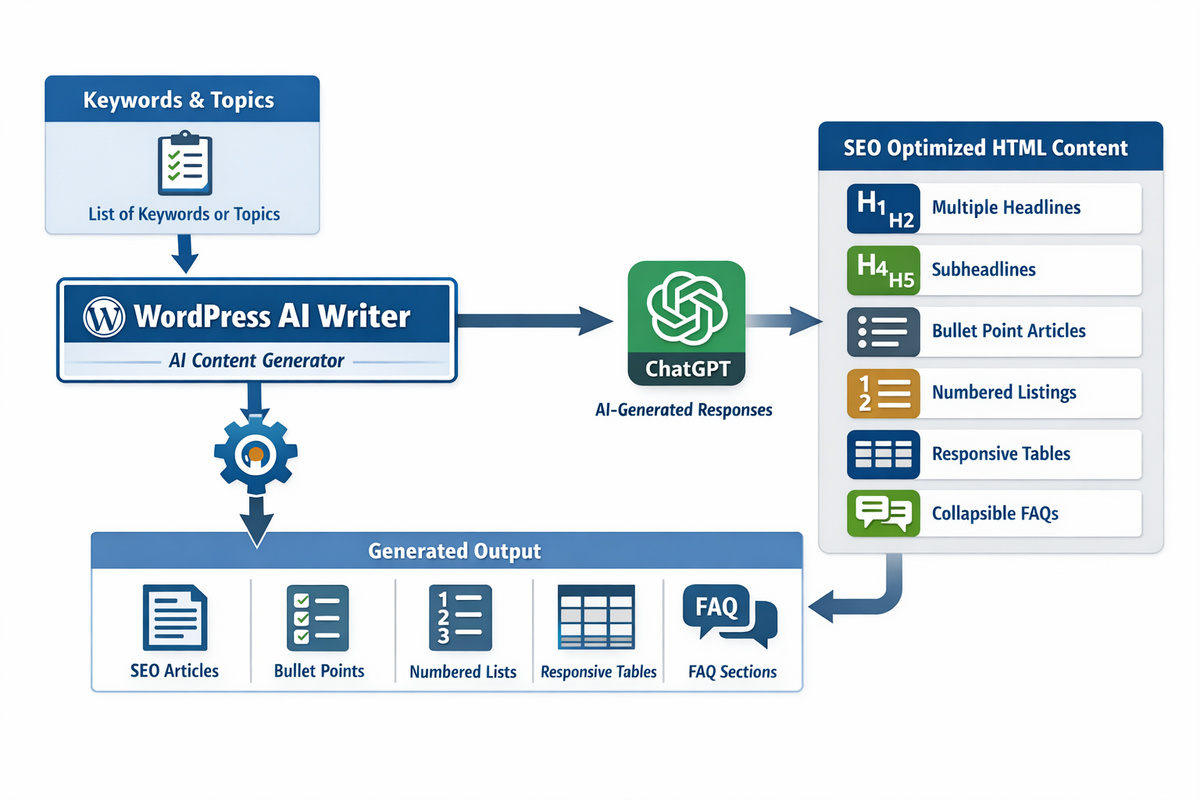
When publishing schedules slip, a WordPress AI writer can give bloggers and site owners a faster way to turn topics into usable article drafts. Instead of starting with a blank editor every time, you can move from keyword ideas to structured content that is easier to review, refine, and publish on a self-hosted WordPress site.
For affiliate marketers, niche publishers, and independent bloggers, the real value is not flashy automation for its own sake. What matters is a steadier flow of articles, clearer formatting, and less time spent repeating the same writing tasks. With this kind of workflow, the WordPress AI writer supports content production in a way that fits real publishing routines.
Across multilingual projects, a WordPress AI writer can also reduce friction when you need drafts in English, German, Spanish, French, or Italian. That makes it easier to serve more than one audience without rebuilding your process for each language version.
Create More Publishable Content Without Slowing Down Your Workflow
Content calendars usually break down for a simple reason: drafting takes longer than expected. Research may be ready, keywords may be chosen, and the topic may be clear, but the first version still takes time to shape. In that moment, a WordPress AI writer helps by turning topic prompts into readable article structures you can work with.
For self-hosted WordPress users, speed matters most when it leads to usable output. That means paragraphs that already follow a logical order, headings that support scanning, and content blocks that are suitable for blog-style reading. A useful draft lowers the amount of cleanup you need before a post is ready for final review.
Writers working on affiliate projects also need content that can present comparisons, explain features, and answer common buyer questions. With the right setup, a WordPress AI writer helps produce article drafts that are easier to adapt for product roundups, how-to posts, category pages, and long-form informational content.
Why a WordPress AI Writer Fits Modern Blog Publishing
Modern blog publishing is not just about writing more words. Search-focused content needs structure, relevance, readability, and consistent output. Because of that, many site owners look for tools that reduce routine work while still leaving room for editing and editorial control. In that workflow, a WordPress AI writer becomes useful as a first-draft engine rather than a replacement for judgment.
For smaller content teams and solo publishers, another advantage comes from consistency. Topic clusters, affiliate reviews, supporting articles, and informational posts all require repeated formatting patterns. When a WordPress AI writer can create articles with tables and organized sections, the content process becomes easier to repeat across many topics.
Write From Keywords Instead of Blank Pages
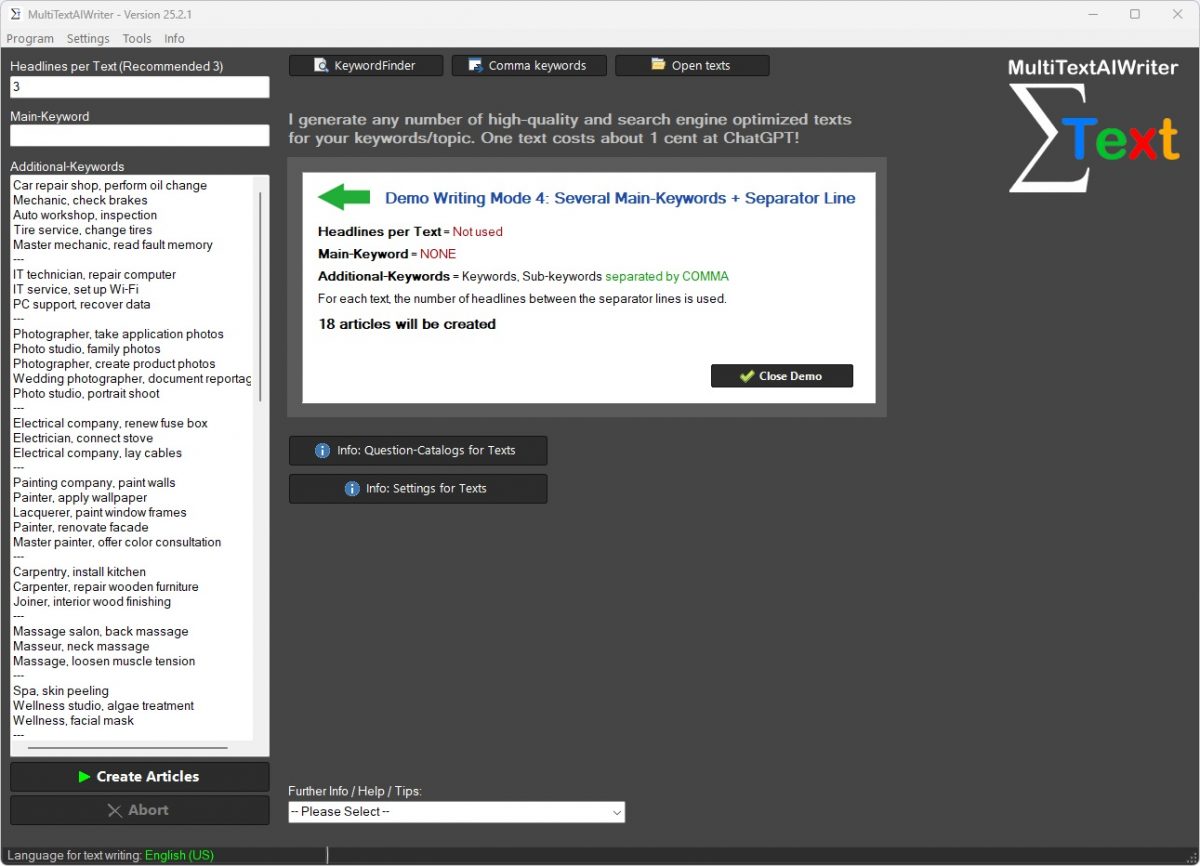
Keyword-based writing is easier when you do not have to invent the whole structure from nothing. With the right prompt, a WordPress AI writer can start from a search term, topic phrase, or article idea and shape that input into a more complete draft. You still control the angle, facts, and final message, but the starting point arrives faster.
This is especially useful for bloggers who keep long topic lists and want to turn them into draft articles in a more reliable way. Instead of losing time between planning and writing, the WordPress AI writer helps bridge that gap with article-ready structure.
Keep Formatting Useful for Readers With a WordPress AI Writer
Good blog content is not only about paragraphs. Readers also need comparison points, quick answers, and visual clarity. For that reason, a WordPress AI writer becomes more practical when it can generate tables, organized sections, and FAQ-style content blocks that fit a reading pattern people already expect on product and advice pages.
On smaller screens, table formatting can become a problem if content is not prepared carefully. When responsive tables are part of the writing output, a WordPress AI writer supports a better reading experience for visitors on phones and tablets as well as desktops.
Built for Bloggers, Niche Sites, and Affiliate Projects
Not every content tool is built around WordPress publishing needs. A generic text generator may produce words, but a WordPress-focused product should support the way blog content is actually planned and used. For self-hosted sites, that means article drafts shaped for publishing workflows, search-focused writing, and repeatable output across many posts.
Affiliate marketers usually need content that compares options, explains use cases, and answers practical buyer questions. Bloggers running niche sites need enough content depth to cover related subjects without spending all week drafting. In both cases, a WordPress AI writer gives you a faster route from idea to editable article.
For single-site publishers, the gain may be consistency. For users running several projects, the gain may be output volume across many topics. In either case, the value comes from reducing repetitive writing effort while keeping the final review in your hands.
What a WordPress AI Writer Can Produce
A broad content workflow becomes easier when one system can support more than one article type. Depending on your setup, a WordPress AI writer can help generate informational posts, blog articles, product-focused write-ups, SEO-oriented copy, and content blocks such as tables or FAQs that make articles easier to scan.
That matters because many WordPress sites do not need only one article format. A useful content tool should support list-style content, comparison-based writing, and structured informational posts without pushing you into one rigid template every time.
Articles in Five Languages
International publishing gets complicated when each language needs a separate drafting process. With support for English, German, Spanish, French, and Italian, a WordPress AI writer gives site owners a practical route for multilingual content planning. That can help bloggers reach new markets or manage region-specific versions of similar topics.
For users working across language variants, the gain is not just more output. The main gain is process control. A WordPress AI writer can keep article creation closer to one repeatable workflow even when the final content needs to serve several language audiences.
SEO Copy, Tables, and Structured Drafts With a WordPress AI Writer
SEO writing usually works better when the article already has a clear frame. That includes headings, topical relevance, readable paragraphs, and content blocks that help visitors find what they need quickly. In that setting, a WordPress AI writer supports SEO copywriting by giving you drafts that are easier to refine around search intent.
Table creation adds another practical layer. On comparison posts, software roundups, feature breakdowns, and affiliate articles, tables can make complex information easier to read. When a WordPress AI writer includes table-ready content, you save time on one of the more tedious parts of article formatting.
- keyword-based article drafts
- SEO-oriented blog copy
- responsive table content
- multilingual text generation
- structured sections for longer posts
- FAQ-style answers for buyer questions
How the Writing Process Saves Time
Manual writing usually slows down in three places: opening structure, repetitive formatting, and first-draft momentum. Once those parts are shortened, the editing stage becomes easier to manage. In practice, a WordPress AI writer reduces the drag between keyword planning and article production by handling the early drafting work faster.
That does not remove the need for review. Strong content still needs fact checks, tone control, and brand alignment. What changes is the amount of blank-page work. Instead of spending most of your time building the first version, you can spend more of it improving a draft that already has direction.
For affiliate bloggers, this can support category expansion and topic coverage. For content-driven sites, the same workflow can help keep publishing active even when time is limited. Because of that, a WordPress AI writer works best as a productivity tool tied to a clear editorial process.
Where a WordPress AI Writer Helps Most
Some use cases benefit more than others. Repeated article formats, topic-based blog growth, and multilingual publishing are strong matches. When a site needs regular publishing on related subjects, a WordPress AI writer helps create a more sustainable drafting rhythm.
Typical use cases include niche content sites, affiliate blogs, product comparison articles, supporting SEO posts, and informational content built around keyword clusters. For users who already know their topics but need faster execution, the WordPress AI writer becomes a practical content engine.
Another strong fit appears when writers need consistent article elements such as headings, explanatory sections, FAQs, and comparison tables. Since these patterns appear again and again in publishing workflows, a WordPress AI writer can remove much of the repetition that slows manual drafting.
Practical Reasons Buyers Choose This Type of Software
Buyers usually look for outcomes, not feature lists. They want faster drafting, clearer article structure, and a workflow that fits WordPress publishing without unnecessary friction. In that context, a WordPress AI writer stands out when it helps reduce routine effort while still leaving final control with the site owner.
Multilingual support matters for users working across regions. Responsive tables matter for readers who compare information on mobile devices. SEO copywriting support matters for publishers who want drafts aligned with search-driven topics. Together, those functions make a WordPress AI writer more useful than a generic text tool for WordPress-focused work.
| Need | What the Software Helps With |
|---|---|
| Faster first drafts | Turns keywords and topics into article-ready text structure |
| Clearer article layout | Supports headings, sections, FAQs, and table-based content |
| Multilingual publishing | Creates drafts in English, German, Spanish, French, and Italian |
| SEO-focused workflow | Supports readable, search-oriented article drafting |
| WordPress blog use | Fits self-hosted publishing and blog content production |
Questions Buyers Ask About a WordPress AI Writer
How does a WordPress AI writer fit into a multilingual content workflow?
Can a WordPress AI writer be useful for comparison-style blog posts?
What kind of users usually look for a WordPress AI writer?
Does a WordPress AI writer help reduce repetitive writing tasks?
Start Creating Search-Focused Articles With Less Manual Writing
When publishing pressure grows, a WordPress AI writer gives self-hosted WordPress users a more practical way to keep content moving. Instead of spending most of the process on first-draft work, you can move faster into editing, refinement, and final publishing decisions.
For multilingual blogs, affiliate projects, and topic-driven content sites, a WordPress AI writer supports a workflow built around usable drafts, clearer structure, and less repetitive writing effort. That makes it a strong fit for publishers who want more output without losing editorial control.